


Stop Guessing Your Wafer Dry Times: Why IR is the Way to Go
When you’re drying MEMS sensor wafers, you’re playing a dangerous game with moisture. One wrong move and you’ve got surface tension pulling those tiny, delicate micro-structures together. We call it “stiction,” and it’s a nightmare for anyone trying to maintain a high yield. If you’re building a smart Fab, you can’t rely on old-school methods. You need heat that behaves.
Making Heat Programmable
Here’s the thing about traditional convection ovens: they’re sluggish. They take forever to warm up and even longer to cool down. Trying to get clean data out of them is like trying to steer a ship with a broken rudder. That’s why we moved to infrared (IR). IR is basically an On/Off switch for heat. It’s instant. Because you can modulate the power so precisely, the heating process becomes just another variable in your code. You can link the output directly to your PLC, so every single wafer gets the exact same treatment. It’s predictable. It’s repeatable. And it actually works with the rest of your digital setup.
The Magic of Short-Wave IR
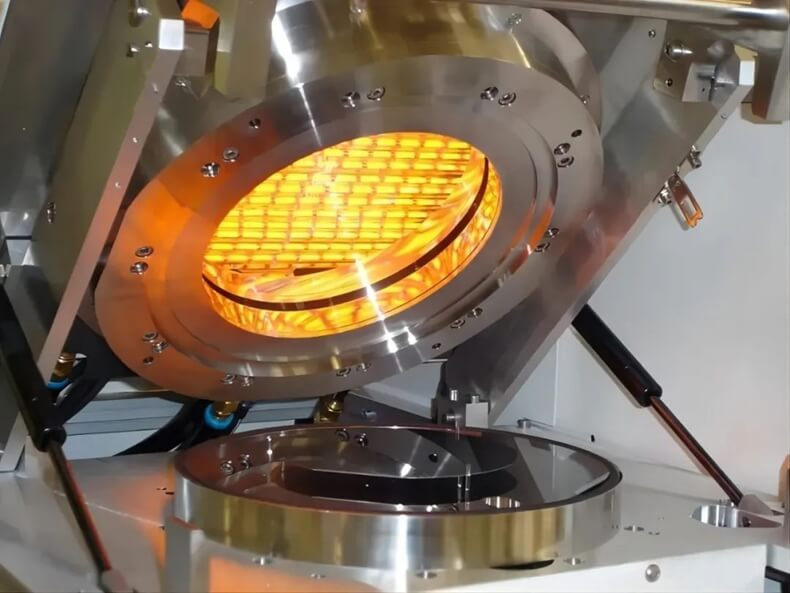
We stick with short-wave IR for MEMS. Why? Because it doesn’t mess around. It hits the surface and flashes that moisture away in seconds. By the time the wafer realizes it’s being heated, the water is gone—which means those beams don’t have time to collapse. But a word of caution: high wattage density is great for keeping your equipment footprint small, but it creates a lot of waste heat. If you go for a high-power array,**don’t skimp on your chassis cooling.**If you do, your control electronics are going to bake, and that’s a headache you don’t need.
Why This Beats the Old Way
Most people are used to heating the air and hoping the part gets warm. That’s a waste of time. IR skips the middleman and warms the wafer directly. It’s faster. It keeps your cleanroom from turning into a sauna. Plus, when you add a closed-loop feedback system with IR sensors, you aren’t just guessing anymore. You can see the actual surface temperature in real-time and tweak the power on the fly. You’re no longer just “running a cycle.” You’re actually controlling the physics of the process.