

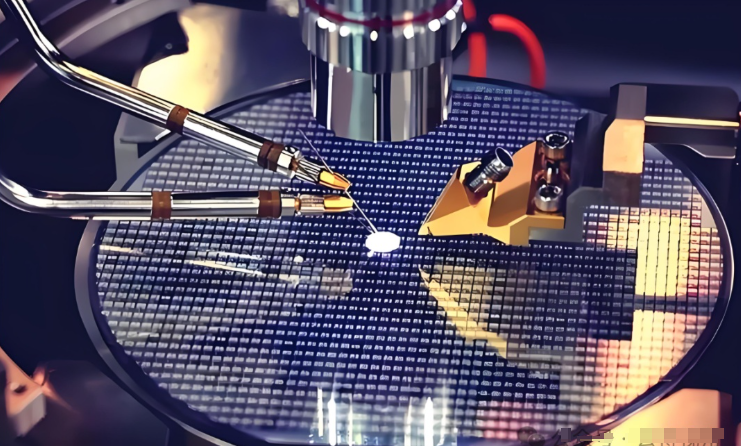
On the line, the clock isn’t a suggestion—it’s the boundary. After spin-coat, the wafer is sitting with a thin photoresist film that has to be conditioned and dried before exposure. Soft bake that isn’t tight, and the resist profile drifts. Hard bake after exposure that isn’t even, and your etch tolerance collapses. And if the final dry step leaves water marks or kicks up particles, you’ll see the price in the yield report the next morning. We built our rapid wafer drying infrared system to pull those variables out of the thermal steps. This isn’t about just heating—it’s about repeatable, wafer-level thermal control that fits inside a production cadence and a cleanroom budget.
What matters under the hood
Rapid wafer drying with infrared is about controlled radiant energy, not bulk convection. We use short-wave infrared emitters matched to how water and photoresist absorb, dumping energy into the film and substrate fast while keeping thermal lag down. The payoff is a thermal response you can sync to the recipe, cycle after cycle. Temperature uniformity is specified at wafer level: ±0.1°C across the heated zone. That number isn’t for the slide deck—it maps straight to bake performance. In practice, it means the same Soft Bake temperature at the center and the edge, and the same Hard Bake profile from lot to lot. Repeatability is the tight distribution of setpoint-to-actual across thousands of runs, not a marketing line. The platform is built for cleanroom life. It runs in Class 1–100 environments, with external surfaces and internal ducting chosen to keep particle generation off the table. Airflow is routed to prevent re-entrainment, and the emitter compartment is isolated so the heat source doesn’t turn into a particle source. Zero particle generation isn’t a slogan—it’s a design target we verify with particle counters during steady-state operation. Reliability comes down to uptime. The system runs 24/7 with scheduled maintenance windows, and the infrared emitter module is built for long life with stable output. We’ve got units past 5,000 hours with less than 5% output drift, tracked in-situ. Unplanned downtime drops when components are modular and wear items are predictable. Energy use isn’t an afterthought. Infrared heating puts energy where it needs to be, without the overhead of heating big chamber walls. Compared with convection-heavy bake steps, the thermal budget is lower while throughput is higher—exactly what matters when the bottleneck is sitting at lithography.
Why it fits the fab
In the fab, the sequence is fixed: spin, soft bake, align, expose, develop, hard bake, etch. Each thermal step sets up the next. When drying and bake are fast and stable, the line moves. When they aren’t, queues build and the process window shrinks. Our infrared drying cuts the drying phase without stressing the photoresist. Water is driven off quickly, and the wafer hits target temperature with minimal overshoot. That keeps the resist profile inside spec, supporting consistent critical dimension control after exposure and development. The same thermal platform handles both Soft Bake and Hard Bake with recipe control. For Soft Bake, temperature stays within tight tolerance to set initial film stress and strip solvent. For Hard Bake, the profile is repeatable enough to harden the resist without flow or degradation, so pattern integrity holds before etch. The result is fewer scrap wafers and less rework. Yield is protected right where contamination usually wins—the final dry. You get a dry surface with no water marks, and you get there without adding particles. That matters at advanced nodes, where a single particle can print and kill a die. Cleanroom compatibility and zero particle generation keep counts low at the output, where the wafer heads into lithography or packaging. Throughput improves because the thermal step stops being the brake. Fast ramp-up and short dwell times fit high-cadence lots without sacrificing uniformity. Process repeatability also cuts qualification time—once the recipe is locked, it stays locked.
What you need to know up front
Infrared drying is line-of-sight, so wafer orientation and emitter positioning influence uniformity. The platform includes fixturing and alignment to set the wafer plane consistently, and the emitter array is arranged to balance the radiant field. Installation needs attention to the mechanical interface, exhaust routing, and cleanroom clearance. Plan service access—emitter modules are serviceable, but you have to design that access into the line. Thermal management is part of the install. The system rejects heat, and that heat has to be routed as specified to avoid drift in adjacent stations. Power and interlock wiring must meet rated voltage and safety requirements. Running outside the specified voltage window will shorten emitter life and destabilize control. Materials compatibility is straightforward, but not universal. The platform uses cleanroom-rated polymers and metals chosen for low outgassing and minimal particle shedding. If the environment includes aggressive solvents or humidity outside the rated range, confirm wetted and exposed materials with the process integration team. We provide a compatibility matrix—use it. Finally, the system integrates with SECS/GEM, but the exact driver configuration depends on the host controller and line software version. Coordinate the communication test with the equipment team before cut-in. The payoff comes quickly: once integrated, the thermal step becomes a predictable, repeatable part of the fab schedule. When the thermal step stops being a question mark, the line runs the way it was planned. Rapid wafer drying infrared brings that certainty—one wafer, one temperature, one result.