
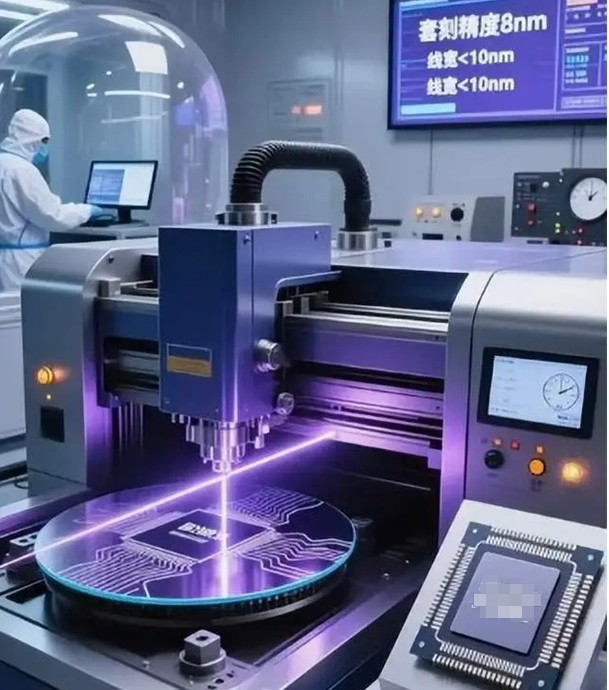
On the fab floor, a Post CMP wafer that comes out of the slurry still carrying micro-droplets on patterned features is basically a yield hit waiting to happen. Water marks, re-deposition, and pattern collapse tend to show up later—right when you get into lithography and etch. The drying heater isn’t just a “nice-to-have.” It’s the last thermal gate before the wafer leaves the CMP cell.
What matters, technically
We built the Post CMP wafer drying heater around a quartz-halogen short-wave emitter. It delivers energy fast and directly, and the output stays stable. Thermal uniformity across the wafer plane is held to ±0.1°C, measured on a production-equivalent carrier, so your thermal budget doesn’t drift between the first die and the last. The heater body is cleanroom-compatible for Class 1–100, with surfaces that don’t shed particles when they cycle thermally. Particle generation is kept down by a low-outgassing design, and by isolating the hot zone from airflow that would otherwise blow contamination back onto the wafer. The payoff is repeatable drying—no visible residue.
Why it holds up in real Post CMP drying
In Post CMP drying, the whole point is consistent evaporation without cooking the film stack. Tight temperature control keeps photoresist and the underlying dielectric stacks inside spec, even after the mechanical and chemical beating of CMP. You end up with faster cycle times because the heater hits setpoint quickly, and fewer scrap wafers because the process repeats shift after shift. The high-efficiency emitter and a thermal design that minimizes parasitic losses cut energy use. Reliability, in practice, comes down to uptime: it runs 24/7, on scheduled maintenance—not on surprise downtime.
What you need to plan for
This heater integrates into standard CMP and cleaning platforms, but the clearance around the emitter and the exhaust path is tight. Line up the mechanical envelope and the gas purge connections ahead of time, and make sure the power and control interfaces match your tool. Operating life depends on cleanroom housekeeping. Too much solvent vapor and particulate loading will shorten window life and make uniformity drift. Treat the heater like part of the process chamber—not an afterthought—and it will hold that ±0.1°C uniformity that keeps wafers dry, clean, and ready for the next step.