
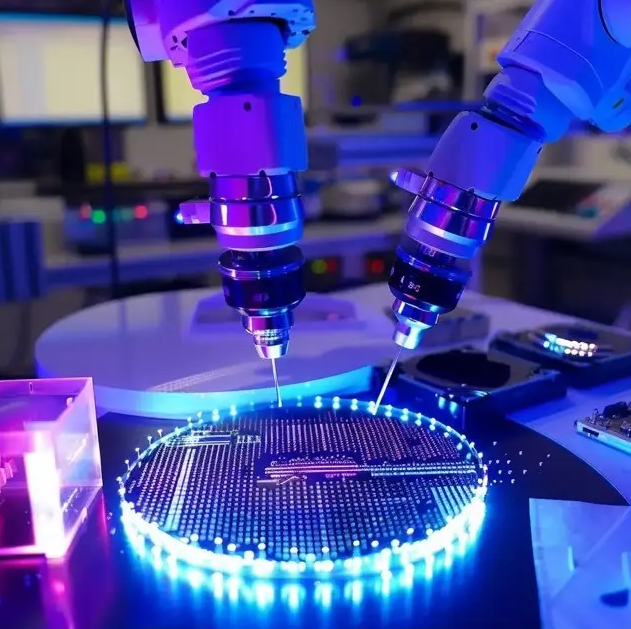
Stop Waiting on Your Heaters: Moving from Forced Air to IR
When people talk about upgrading clean room gear in a fab, they usually obsess over throughput. But if you actually look at the deep processing stages, the real killer isn’t the process itself—it’s the ramp-up time. Most of us are used to hot air circulation. You heat the air, the air heats the wafer, and you wait. It’s slow. It feels like watching paint dry while your production clock is ticking.
Cutting Out the Middleman
Infrared (IR) heating changes the math. Instead of relying on air to carry the heat, IR emitters beam energy directly into the substrate. The “time cost” just vanishes. Since you aren’t waiting for a gas to soak through, your warm-up cycles go from minutes to seconds. For any engineer planning a new line, that’s a huge win. You’re moving from a machine that sits idle for ten minutes to one that hits the target temperature almost the moment you flip the switch.
Getting Your Floor Space Back
Here’s another perk: IR lets you shrink the heating chamber. You can ditch the massive blowers and all that clunky ductwork used to push hot air around. That frees up a surprising amount of room in the clean room. Depending on what you’re working with—wafer thickness and material—you can go with short-wave IR to get deep into the material or medium-wave if you just need precision on the surface.
The Catch: It’s Fast, and That’s Dangerous
Now, IR isn’t a magic wand. It’s aggressive. Because the heat density is so high, it’s easy to overshoot your target temperature. If your PID controllers aren’t tuned just right, you’ll blow past your goal. You can’t just swap out the hardware and keep your old air-based control logic. That’s a recipe for disaster. You’ll need fast-response thermocouples or pyrometers to make sure you don’t accidentally scorch the substrate. And a word of advice? Watch your shielding. If your cooling system is too small, that radiant heat will bleed into your sensitive optics. Get the shielding right, or you’re basically baking your own sensors.