
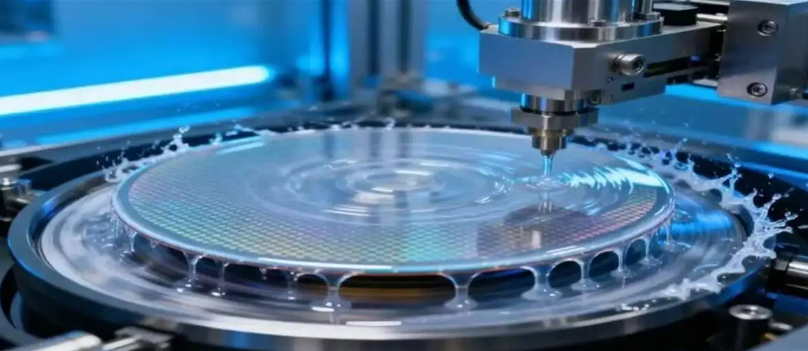
On the fab floor, the furnace isn’t a black box. It’s a tightly controlled thermal boundary. If the lamp array starts to underperform, the temperature map across the wafer drifts. Photoresist profiles shift. Oxide thickness variance widens. Yield drops—quietly, and in the numbers. We build diffusion furnace lamps for one reason: deliver stable, repeatable heat where the process needs it, without adding contamination risk. The lamp is the interface between electrical energy and the wafer’s thermal budget. It has to be precise, clean, and dependable—shift after shift.
What matters, technically
In diffusion furnaces, the lamp array has to heat wafers with tight thermal uniformity and still play by cleanroom rules. Our lamps use near-infrared (NIR) emission with a spectral output engineered to match how silicon and process stacks absorb heat. That cuts thermal lag and gives a cleaner setpoint response than conventional resistive heating in a lot of thermal cycles. The specs are chosen for the realities of the fab, not the slide deck:
- Temperature uniformity: ±0.1°C across the wafer plane, measured at stable setpoints. This isn’t a marketing number—it’s the tolerance you need to keep critical dimensions and film thickness in spec.
- Cleanroom compatibility: Built for Class 1–100 environments. The lamp envelope and fixtures are designed to minimize particle generation, and the materials are selected to meet low-outgassing requirements.
- Zero particle generation: Sealed quartz envelopes and ceramic fixtures keep metallic contamination out and hold particle counts flat during long runs.
- Thermal repeatability: Setpoint to setpoint, lot to lot, the same temperature profile comes back without drift. Repeatability is what separates a stable process from one that needs constant retuning.
- Uptime behavior: We’ve seen units run beyond 5,000 hours with less than 5% output decay, under controlled operating conditions. We offer short-wave and medium-wave configurations, depending on the thermal profile you’re chasing. Halogen NIR sources deliver rapid, controllable heat. Quartz components give you chemical resistance and thermal stability. Carbon-fiber-reinforced supports cut thermal mass and speed up response, so you stabilize faster after setpoint changes.
Why this works where it counts
Diffusion and anneal steps are where thermal uniformity turns directly into electrical performance. A small hotspot becomes a leakage path. A cool edge becomes a thickness excursion. These lamps hit the pain points that show up in day-to-day fab operation. **Wafer-level uniformity you can verify.**The ±0.1°C uniformity target comes from matched lamp output, controlled reflector geometry, and stable power delivery. The payoff is consistent film thickness and junction profiles across the wafer—fewer edge losses and less rework. **Photoresist bake that stays in spec.**In lithography, the soft bake and hard bake set the photoresist profile. Temperature excursions lead to underexposure, scumming, and poor development. The lamp system holds bake temperatures with tight repeatability, so line-width variation drops and pattern fidelity improves. **Cleanroom behavior that doesn’t fight you.**Particle spikes during thermal ramps are a classic yield killer. The lamp assembly is engineered to keep particle counts low in steady state and during ramps, so you aren’t chasing contamination that starts in the heating subsystem. **Reliability that reduces the fire drills.**Unplanned downtime on a furnace line is expensive. These lamps are built for 24/7 operation with predictable maintenance intervals. When output stability holds over thousands of hours, you spend less time troubleshooting and more time running lots. **Energy and cycle efficiency.**NIR heating is directional and responsive. It wastes less heat in fixtures and shortens stabilization time. That means more lots per day and lower energy per wafer—without giving up thermal control.
What you need to know
A high-precision lamp is only as good as the system it’s installed in.
- **Compatibility.**The lamp has to match the furnace tool’s mechanical interface, electrical connections, and control architecture. We support standard connector types and provide dimensional drawings for retrofits, but you still need to cross-check against the furnace model before ordering.
- **Thermal mass and response.**Fast response is valuable, but the furnace chamber and wafer boat shape the thermal dynamics. Expect a short tuning period to dial in ramp rates and overshoot—especially when you move from resistive heating to NIR.
- **Operating conditions.**Lamp life and output stability depend on voltage stability, cooling, and cleanliness. Use regulated power, keep cooling paths clear, and follow the cleaning procedures. In harsh environments, quartz can scratch; treat it with the same care you give optics.
- **Replacement planning.**Even with long life, lamps are consumables. Plan replacements around scheduled maintenance windows. Keep a matched set on hand so uniformity stays consistent after swap-in. If you run diffusion, anneal, or lithography bake steps where temperature is a primary control variable, the lamp isn’t a peripheral. It’s part of the process. We design it to act that way—measurable, repeatable, and clean.