
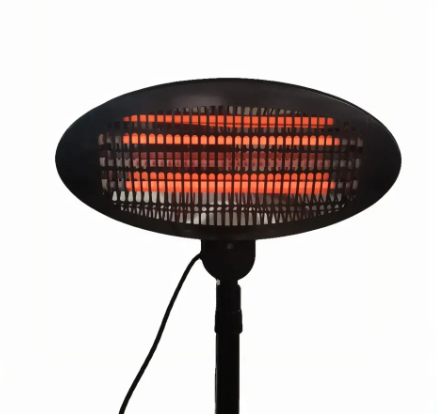
The Core Principle: Why Infrared Heats Fast
Here’s the thing about these industrial infrared heaters—they’re not just fancy lamps. They’re direct heat sources, plain and simple. They turn electricity into infrared radiation that hits your target surface directly. No wasted time heating the air first. That’s why you get that instant warmth, the kind that hits you right away. We built the whole system around how the filament actually works. When the current hits that tungsten filament, it gets up to operating temperature almost instantly. Then it throws off short-wave infrared energy. No long warm-up. Just rapid heat, right when you need it.
Technical Deep-Dive: Power, Voltage, and Physical Specs
We match these heaters to the power setup you already have on the factory floor. A typical unit runs on 400V, pulling 2500W to pack a serious punch in a small space. The 300mm tube length focuses all that energy into one tight zone. Perfect when you need to hit a specific part or area—without the heat spreading where you don’t want it. That power-to-size ratio? Totally intentional. High wattage in a short tube gives you intense, localized heat. But it also means you’ve got to plan your thermal management carefully—ventilation, shielding, and mounting spacing. If you don’t, surrounding components can run hotter than you’d expect.
Material & Design: Halogen, Quartz, and the R7s Connection
Inside the tube, the halogen cycle keeps the filament steady, even at scorching temperatures. The quartz envelope handles the thermal shock and stays clear, no matter how many times you cycle the heat on and off. And the coating on the quartz? It reflects infrared back toward the filament, which boosts efficiency and keeps the temperature stable. The R7s connector makes all this practical. It gives you a secure, high-temperature electrical connection, and makes the tube a simple drop-in replacement when it’s time for maintenance. Wire it up, clamp it in place, and you’re good to go. No need to rework the whole mounting setup.
Application & Benefits: Fast Cycling for Engineers
On the production floor, the real win is cycle time. Infrared heaters snap back to temperature fast, so you can run quick, repeatable heating steps. Whether you’re heating parts for assembly or keeping a process line at the right temperature, the response is immediate. But there’s a trade-off with control. Because the heat is direct and intense, you’ve got to pair the heater with solid temperature sensing and regulation. Match the controller to the heater’s response speed, and you get predictable results—no overshoot, no guesswork.